An AI Chief of Staff that connects the business
How an AI Chief of Staff can connect Xero, Meta Ads, Google Analytics, CRM, email and business KPIs into one useful management view.
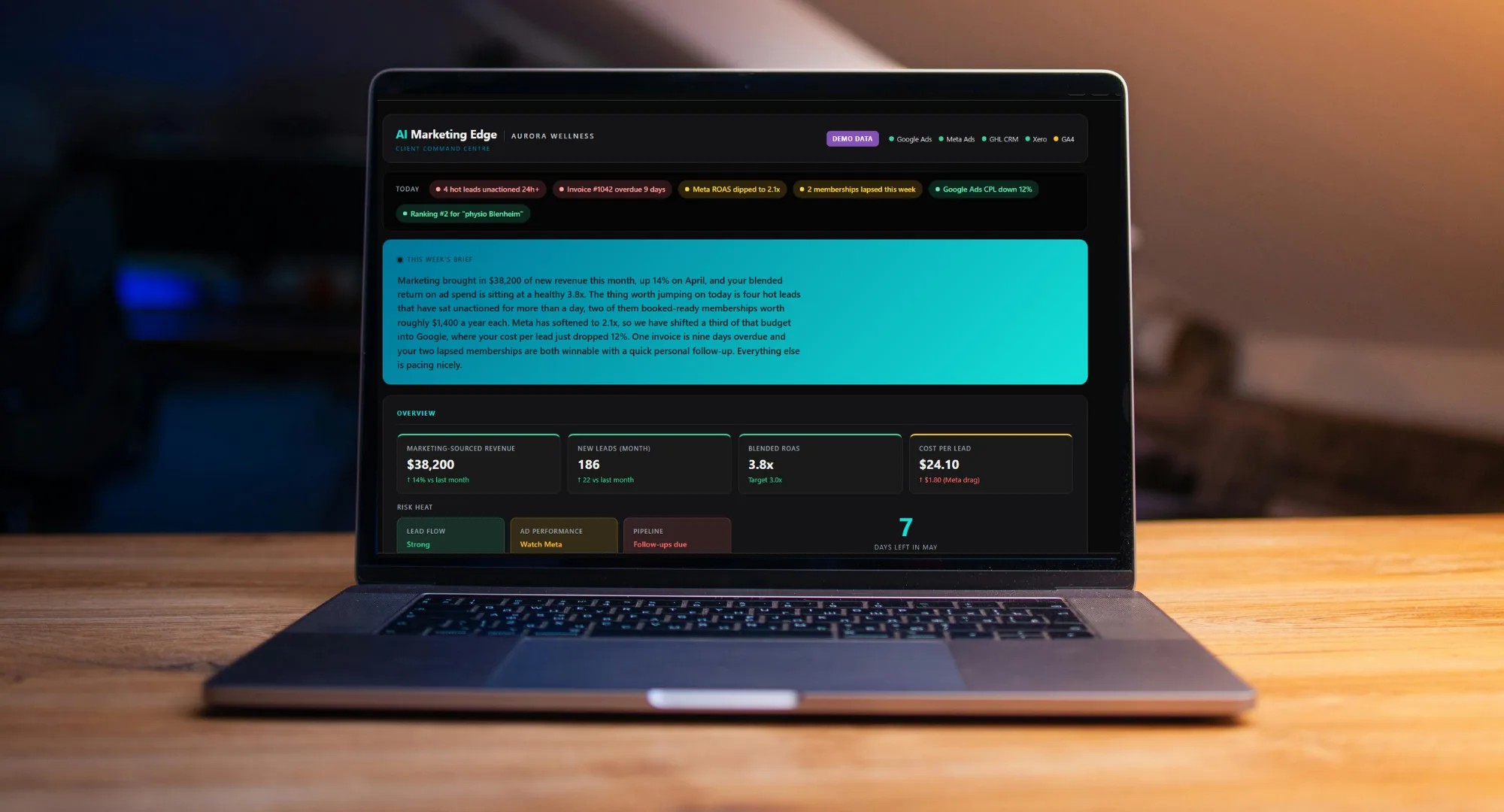
Most businesses don't have a shortage of data. They have it everywhere.
Revenue is in Xero. Marketing performance is in Meta Ads. Website behaviour is in Google Analytics. Sales opportunities are in the CRM. Proposal follow-ups are buried in email. The business plan says where the company wants to go.
Each platform gives you one part of the picture. The owner still has to connect it all. That is the problem I would use an AI Chief of Staff to solve.
The purpose isn't to create another dashboard. It is to answer a handful of useful questions: are we on track, what has changed, what needs attention, which opportunities are stuck, where is money being spent without the expected result, and what decisions need the owner's involvement?
The workflow
At a high level, Xero, Meta Ads, Google Analytics, CRM, inbox and business goals feed into an AI management layer that produces:
Risks → Decisions → Follow-ups → Opportunities → Priorities
The important part isn't simply connecting the systems. It is giving the AI enough business context to understand what matters.
Start with the business goals
Before connecting any platform, I would define what the business is trying to achieve. For example: a revenue target of $1.2M annually, a qualified pipeline target of $450k, a marketing target of 60 qualified enquiries per month, no proposal left without a next action, and overdue receivables kept below an agreed level.
This gives the Chief of Staff something to compare actual performance against. Without that context, "revenue is down 7%" is merely an observation. With it, "revenue is 7% below target and qualified pipeline has also moved below the agreed warning level" is something worth investigating.
Xero shows what has happened
Xero gives the financial view. I would use it to surface revenue against plan, outstanding invoices, overdue accounts, material changes in spending and financial warning indicators.
The owner doesn't need every number repeated back to them. They need exceptions. For example, "revenue is tracking 6% behind the monthly plan", or "two customers account for most of the overdue receivable balance". That tells someone where to look.
Marketing needs to connect to sales
Meta Ads and Google Analytics tell us what is happening in marketing and on the website. But platform performance isn't the final commercial outcome.
Suppose Meta lead volume is stable and Google Analytics shows website conversion is also stable, but the CRM shows fewer qualified opportunities. That tells us something important has changed further down the journey.
The AI shouldn't jump to a conclusion and announce that the ads are bad. It should say:
Lead generation remains stable, but fewer leads are becoming qualified opportunities. Review lead quality, response times and qualification.
That is the kind of cross-system analysis I want.
The CRM shows what might happen next
Xero largely shows what has already happened. The CRM shows what may happen next. I would monitor open opportunities, pipeline value, sales stage, last activity, next action, proposal value, proposal sent date, expected close and stalled opportunities.
This matters because a business can have a good month while quietly developing a problem for the next one. If revenue looks healthy but pipeline is shrinking, I want the owner to know before the revenue falls.
Proposal follow-up is a good example
Proposals can disappear into the gap between CRM and inbox. A proposal goes out. The client says they'll review it. Seven days pass. Then fourteen. Nobody has technically done anything wrong, but the opportunity has stopped moving.
So I would give the system a rule: if a proposal has passed its follow-up date without a meaningful response, flag it. The morning briefing might say, "three proposals worth $42,500 are awaiting responses. Two have passed their agreed follow-up dates."
The AI can then prepare draft follow-ups using the existing conversation and proposal context. A person reviews them before anything is sent. Simple workflow. Obvious commercial value.
Email adds context the CRM may not have
Imagine the CRM says an opportunity is worth $50,000, at proposal stage, with an expected close in September. But the latest client email says they have delayed the project until January. The pipeline now looks healthier than reality.
I would want the Chief of Staff to flag that the $50,000 opportunity is still forecast for September while the latest client email suggests a delay until January, and to review the expected close date. It doesn't automatically change the CRM. It surfaces the discrepancy. That is a safer use of AI and a more useful one.
Report exceptions first
I wouldn't structure the output like a traditional dashboard. If nine KPIs are fine and one could cause a cash problem, the cash problem belongs at the top. My briefing would lead with decisions required, then risks, then follow-ups, then opportunities, then progress against goals. That is closer to how an owner actually thinks about the business.
What a morning brief could look like
That is the point of the system. The owner doesn't need six tabs open to work out what matters.
Don't mix different definitions
Xero, Google Analytics and Meta may all display something related to revenue. That doesn't mean the numbers mean the same thing. Xero may show accounting revenue. Google Analytics may show website revenue tracking. Meta may show attributed conversion value.
The Chief of Staff can compare those figures. It shouldn't combine them carelessly and call the result "revenue". The same applies to leads, conversions and opportunities. Clear definitions matter because bad reporting can look very convincing.
The AI should know when it doesn't know
If revenue falls while advertising spend rises, the system shouldn't automatically decide that marketing caused the problem. It should show what the evidence supports and identify what needs checking next.
Marketing spend increased while revenue declined. Website conversion remains stable, but qualified pipeline has also fallen. The available data does not establish one cause. Review lead quality and sales progression.
That is a much better management aid than a confident explanation built on guesswork.
The takeaway
Xero knows the financial numbers. Meta knows advertising performance. Google Analytics knows what happened on the website. The CRM knows the pipeline. Email contains the conversations. The business plan contains the intent. The owner still has to connect them.
An AI Chief of Staff can become that connecting layer. Its value isn't in giving the business more information. It is in showing what matters now, why it matters, and what should happen next.
Need an AI Chief of Staff built around your business?
I build AI workflows that connect the tools a business already uses with the decisions the owner actually needs to make, with human approval kept where commercial judgement is required.